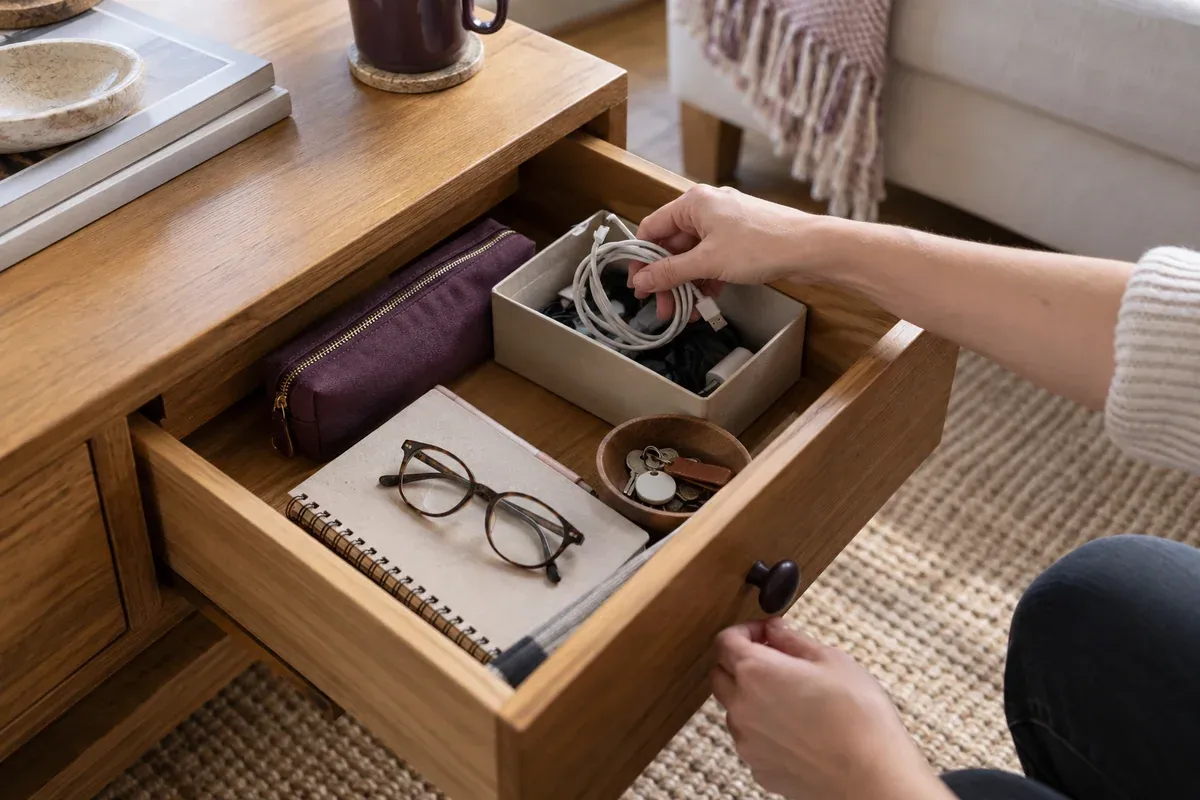
If you cannot find what you need, an organiser may help you make decisions about belongings and set up storage that works for your household. If accessible surfaces need dusting, washing or vacuuming, a cleaner may be the right starting point. Some homes need both, with sorting and organising first so cleaning can follow.
You do not need a perfectly arranged home before asking for help. Start with the outcome you want: a usable kitchen bench, clothing you can find or a room you can clean without moving the same pile each time.
Looking for the former Declutter Life website?
Declutter Life previously presented Danielle Atkins as a Sydney professional organiser. Its archived About page described her work helping people organise their belongings. Home Beautiful also cited Atkins when discussing why the original cost of an unused possession need not determine whether you keep it.
This is a new Simply Maid guide. It is not Danielle's original About page, and the historical references do not establish a current relationship between Danielle and Simply Maid. For the original context, see the archived Declutter Life About page and Home Beautiful's organising article.
Separate the jobs before choosing help
What is getting in the way? | Help to consider | Scope to agree |
|---|---|---|
Too many belongings or difficult keep-or-pass-on decisions | Professional organising | Who makes decisions, which area you will tackle and the pace that suits you |
Storage that makes everyday items difficult to reach | Professional organising | A practical layout using existing storage where possible |
Dust, spills or grime on accessible surfaces | House cleaning | Rooms, surfaces, inclusions and any separately booked extras |
Bags of outgoing possessions | An agreed donation, recycling or collection arrangement | Who transports them, where they can go and any costs |
An organiser's services vary. Confirm what the particular provider offers before booking. Likewise, a cleaning appointment does not automatically include sorting private possessions, deciding what to discard, reorganising cupboards or removing unwanted goods.
When a small organising session may be enough
Choose an area you can finish and restore in the time available. A drawer or one shelf is easier to manage than emptying a whole room. Sort only your own items or belongings you have permission to handle. Keep uncertain items in a clearly labelled review container rather than making decisions for somebody else.
Give what stays an accessible place near where it is used. Decide the next step for outgoing items before starting another area. Our guide to decluttering one small space at a time explains the method, and the decluttering checklist can help you plan a session.
Keeping something because it was expensive
The money you originally spent is one part of an item's history. Your next decision can also consider its present usefulness, sentimental value, storage needs and the effort involved in caring for it. Keeping an expensive jacket that you enjoy wearing makes sense. Keeping an unworn jacket solely because of its price may deserve a second look.
Ask whether the item still has a role in your life. If you want to sell it, choose a realistic deadline for photographing and listing it. Factor in the work of organising a sale rather than treating a hoped-for resale price as money already recovered. Donation is another option when the receiving organisation accepts the item. There is no need to rush a decision about something important to you.
For clothes, use the wardrobe decluttering guide to separate everyday use, repairs, seasonal storage and deliberate keepsakes.
Questions to ask an organiser
- Have you worked on the kind of space and practical problem I need help with?
- How will we agree what to keep, and can I pause decisions I am not ready to make?
- What is included in the appointment, and what would cost extra?
- Will you work with the storage I have before recommending purchases?
- Who handles donations, recycling and outgoing items?
- How will the system work for everyone who uses the space afterwards?
The Institute of Professional Organisers provides a directory for finding providers. Check the individual provider's current services, availability and suitability; inclusion in a directory is not a Simply Maid endorsement.
Plan the clean after the sorting
Once the area is accessible, identify which surfaces need cleaning and check that the booked service covers them. Leave enough time to put retained items away. Avoid covering the bed or blocking walkways with sorting piles that cannot be finished that day.
For cleaning support, read what to consider when hiring a cleaner. Explain the condition of the space and the work you want done before booking. Organising and cleaning can complement each other when both jobs have a clear scope.
Editorial note
Prepared with AI assistance using the sources linked in this guide. This is original Simply Maid guidance, not a republication of the former Declutter Life website.
Change log
Who wrote and edited this article, when its sources were checked, and what changed.