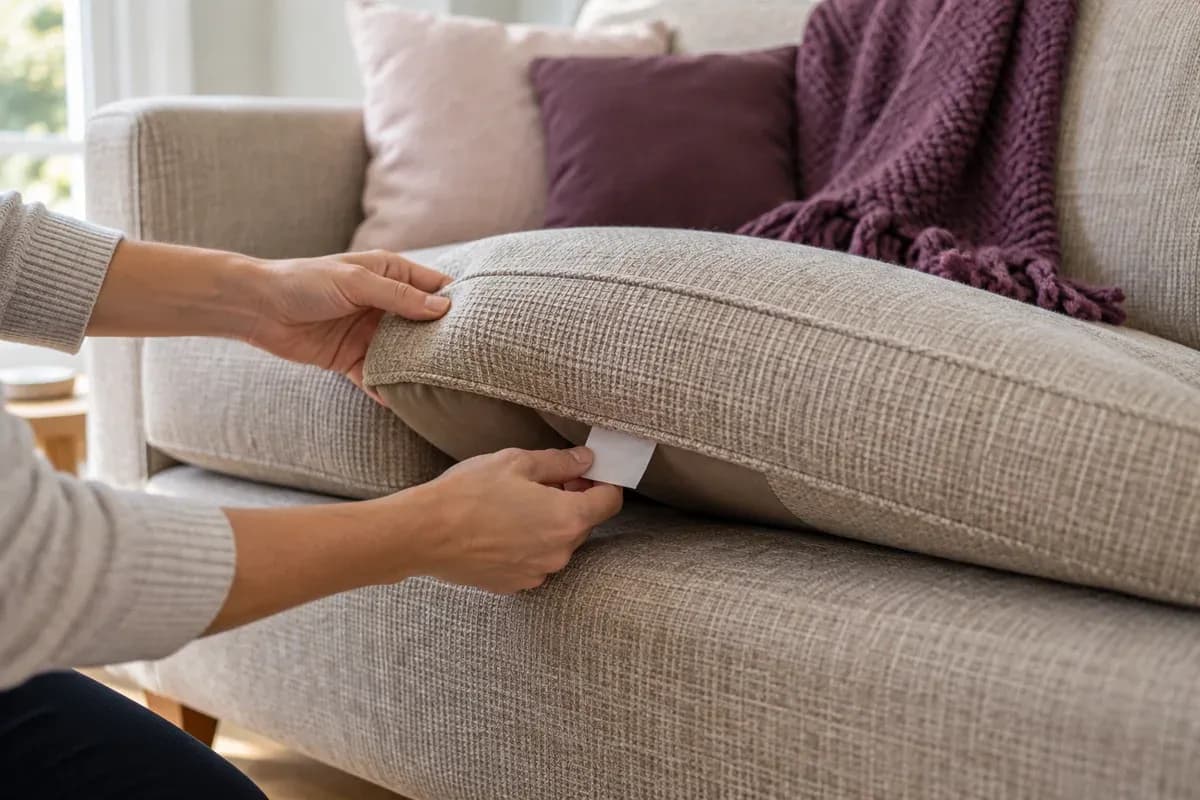
A couch stain needs a method that suits both the spill and the upholstery. Identify the care instructions before applying a product; the same stain can need different handling on two sofas.
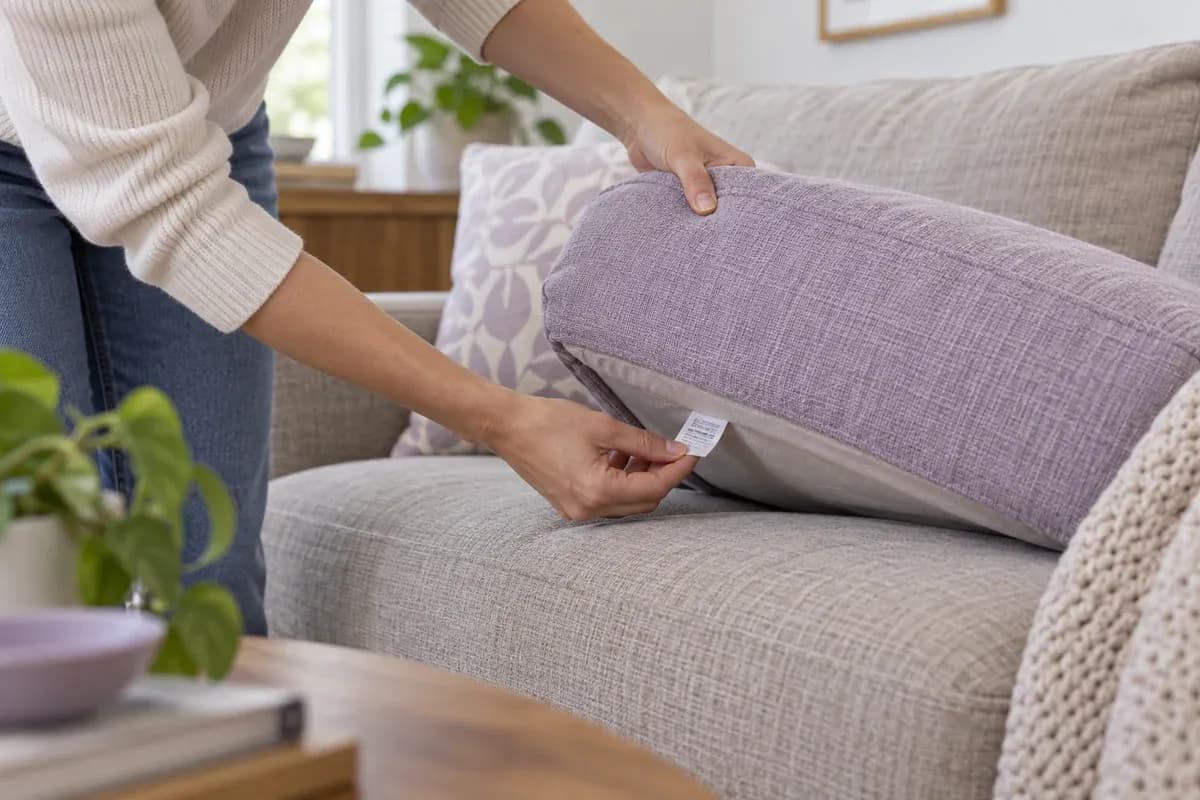
Before You Start: Check Your Cleaning Code

W, S, WS and X codes indicate different restrictions. Check the manufacturer’s full instructions; a removable cover is not automatically machine washable.
Read the illustration as text
- Find the care instructions
- Identify the actual cover, finish and cleaning code.
- Choose a compatible method
- Test as directed; do not assume a water recipe suits every couch.
- Protect the inner layers
- Avoid over-wetting seams, backing and cushion filling.
If the label is missing, ask before adding cleaner.
Read the sofa’s own care label and manufacturer instructions before applying a cleaner. W generally refers to approved water-based spot cleaning; S to approved water-free solvent spot cleaning; W-S to either permitted approach; X to vacuuming or light brushing without liquid cleaner. These codes are starting points, not permission to use any household chemical.
If the label is missing, contact the retailer or manufacturer. A hidden-area test cannot establish an unknown fabric’s full care requirements. A removable cushion cover is not necessarily washable, and W or W-S alone does not approve hot-water extraction.
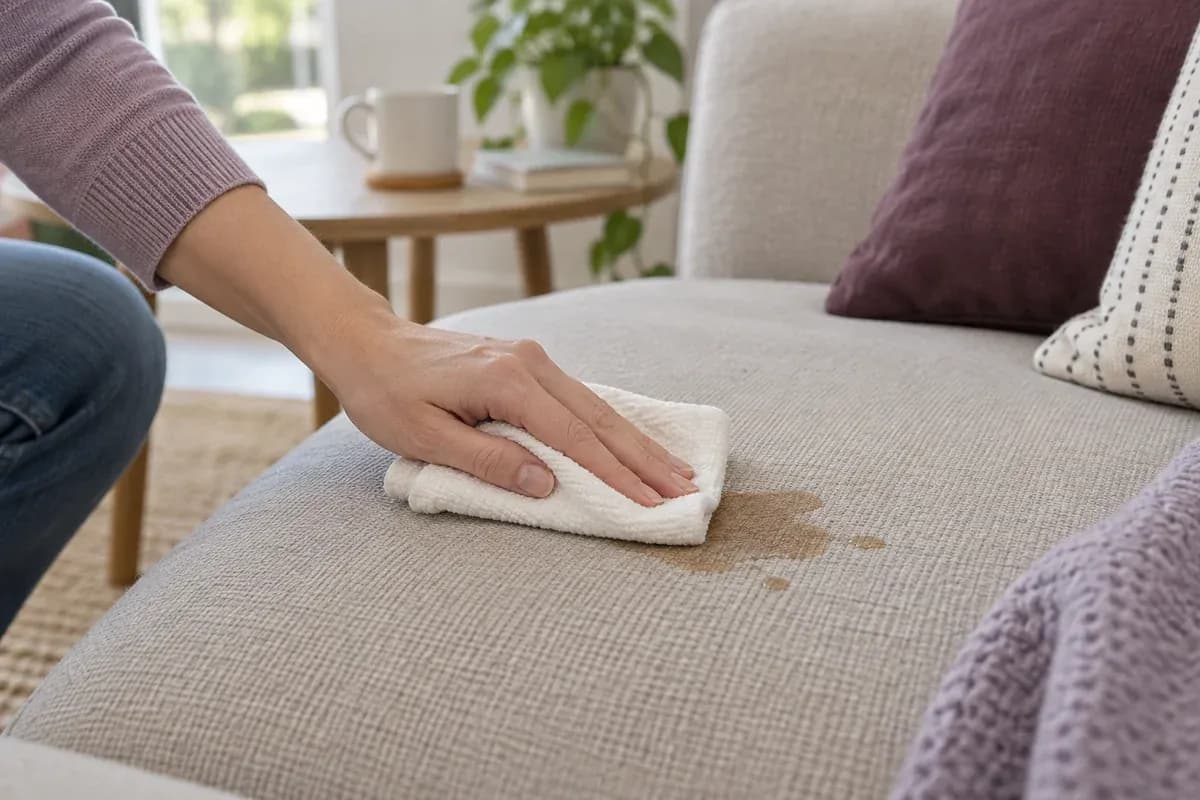
The Golden Rule: Blot, Don't Rub
For an ordinary fresh liquid spill, gently blot with a clean white absorbent cloth, working inward from the edge. Change to a clean part of the cloth as it takes up the spill. Avoid aggressive rubbing and saturation.
Then use only the treatment permitted for this fabric and stain. Follow its directions for testing, application, residue removal and drying. There is no universal 15–20 minute contact time.
How to Remove Blood Stains from a Couch
Do not use the former peroxide-and-water recipe as a general upholstery treatment. Identify whether the fabric permits wet spot cleaning and obtain an approved stain method. A visible mark disappearing does not establish that a surface has been disinfected. For significant or unknown bodily-fluid contamination, arrange appropriate specialist assessment.
How to Remove Ink Stains from a Couch
Tell the furniture supplier which ink was spilled and what has already been applied. Do not assume rubbing alcohol suits the dye, coating or backing. If there is no expressly approved ink treatment for this upholstery, stop before adding another solvent or water.
How to Remove Nail Polish Stains from a Couch
Do not reach for cosmetic nail-polish remover. “Acetone-free” is not an upholstery-compatibility claim. Keep the product container so a specialist can identify the spill, and ask for advice before scraping, dissolving or wetting the mark.
How to Remove Pet Urine Stains from a Couch
Blot accessible moisture without soaking the cushion. Check whether liquid has reached seams, filling or the base; treating the visible cover may leave the underlying problem untouched. Use an upholstery-approved product only where the furniture’s care instructions allow it. Follow its exposure and drying directions around pets.
The previous vinegar, bicarb and enzyme sequence was not a reliable method for every couch. Tell the cleaner about the accident and prior products before asking whether the item can be treated.
How to Remove Grease and Oil Stains from a Couch
Lift loose solids gently without grinding them into the weave. Follow the fabric supplier’s grease-stain procedure. The former equal-parts ammonia recipe and direct dish-liquid treatment should not be used as defaults; a stronger mixture is not a substitute for identifying the upholstery.
How to Remove Food and Drink Stains from a Couch
Remove loose food and blot fresh liquid gently. Check the care instructions before treating the remaining mark. Use only the specified amount of a compatible cleaner; do not increase its strength or repeat wetting until the stain disappears. Stop if colour transfers or the texture changes.
When to Call a Professional
Ask for an assessment when the material is unknown, the label restricts cleaning, the spill has reached the filling, or a previous treatment has changed the colour or texture. A professional should still respect the manufacturer’s restrictions.
Simply Maid offers hot-water extraction for eligible fabric upholstery after suitability checks. It does not make every couch suitable for wet cleaning, repair damaged finishes or guarantee stain removal. Share the care label, photographs, stain history and products already used before booking. See upholstery cleaning suitability and inclusions.
If you are considering professional help, compare upholstery cleaning prices and check the service suitability guidance. Tell the provider the care code, stain and products already used before asking for a quote. A price per seat does not confirm that your fabric is suitable or that a stain can be removed.
Frequently Asked Questions
Q: How do you get old, set-in stains out of a couch?
Start with identification and an assessment of prior treatment. Repeated soaking and longer contact times can compound a problem; an old mark may not be removable.
Q: Can I use vinegar to clean any couch stain?
No. The furniture’s care instructions determine whether any proposed liquid is suitable. A pantry ingredient is not automatically an approved upholstery cleaner.
Q: Is it safe to use hydrogen peroxide on coloured upholstery?
Do not use it as a default. It may alter colour, and a spot test does not override a fabric maker’s restriction. Ask for an expressly approved treatment.
Q: What's the best way to prevent couch stains in the first place?
Follow routine care, deal with spills promptly and use washable protectors only where the furniture maker permits them. Check compatibility before adding any fabric-protection treatment.
Q: Can I use bicarb soda to remove couch stains?
Do not add powder to a damp stain as a universal method. It can leave residue, and your vacuum may restrict fine powders. Follow the furniture and appliance instructions.
Related Reading
- How to Remove Pet Pee Odour From Floor Tiles and Carpet
- How to Clean a Mattress and Remove Stains
- Green Cleaning 101: How to Make and Use Natural Cleaning Solutions
Sources & References
La-Z-Boy: fabric care and cleaning codes. Association for Contract Textiles: cleaning resources, Appendix I. These references explain the limits of care codes and testing; follow the item’s own instructions.
Editorial correction, 12 October 2026: removed universal peroxide, ammonia, solvent, vinegar and bicarb recipes; clarified care-code limits, unknown fabrics and the scope of professional cleaning.